

Dental Bridge St. John's: Your Complete Guide
Losing a tooth does not just affect how you look. It changes how you chew, how you speak, and over time, how the rest of your teeth sit in your jaw. Gaps left by missing teeth allow neighboring teeth to drift, alter your bite, and accelerate bone loss beneath the gumline. If you are exploring a dental bridge in St. John's, you are already asking the right question. This guide covers everything you need to know, from the different bridge types and the step-by-step procedure to what the recovery looks like, how long a bridge lasts, and how to decide whether a bridge is the right option for you. At Stavanger Dental, we work through these decisions with families every day, and this article reflects how we actually think through each case.
Table of Contents
What Is a Dental Bridge?
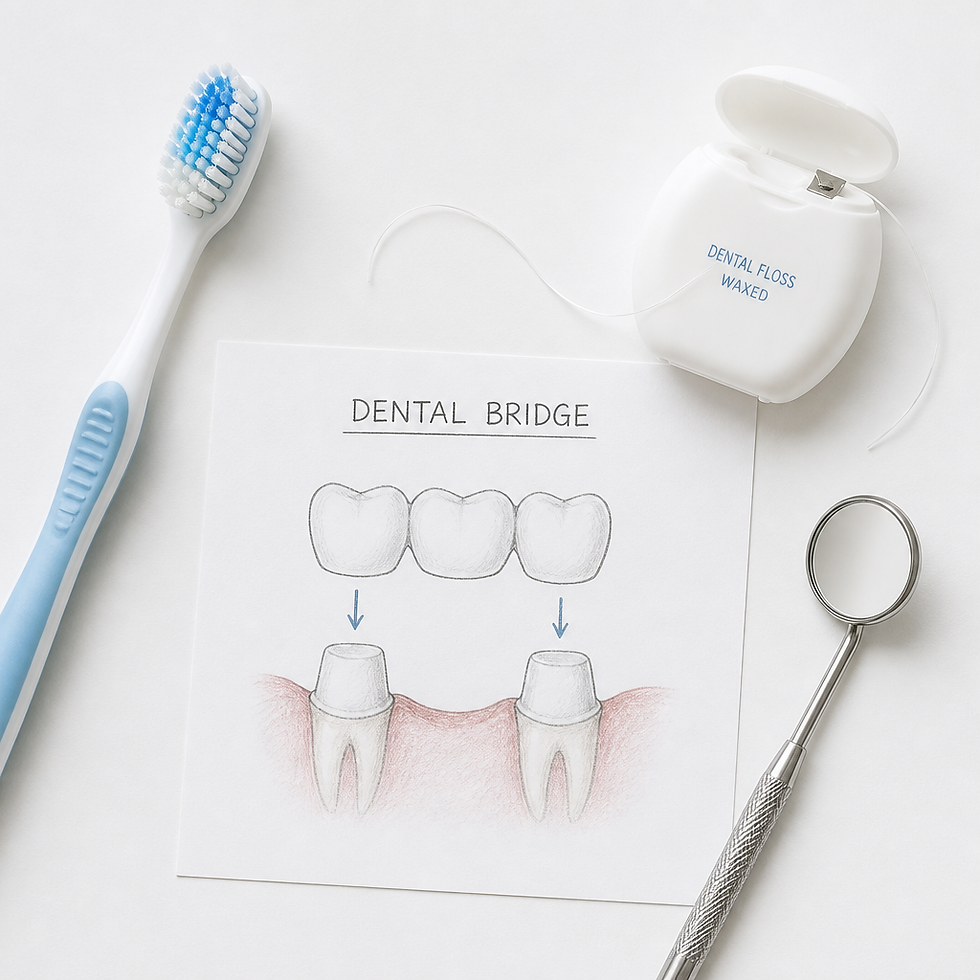
A dental bridge is a fixed prosthetic device that literally bridges the gap left by one or more missing teeth. It consists of one or more false teeth, called pontics, held in place by dental crowns cemented onto the natural teeth on either side of the gap. Those anchor teeth are called abutment teeth.
Because a bridge is cemented into place, it is not removable like a denture. You brush and floss it like your natural teeth (with some technique adjustments, which we cover below). The bridge restores your bite, prevents surrounding teeth from shifting into the space, and gives you a natural-looking, functional smile.
What a bridge does not do is replace the root of the missing tooth. This means the jawbone beneath the pontic no longer receives the stimulation that a natural root or a dental implant provides, which can lead to gradual bone resorption over time. That trade-off is one of the most important factors to discuss with your dentist when weighing your options.
Quick Takeaways
Key Insight
Explanation
A bridge is fixed and non-removable
Unlike a partial denture, a dental bridge is cemented permanently in place, which means greater comfort and stability during eating and speaking.
Abutment teeth require preparation
The healthy teeth on either side of the gap must be reshaped to accommodate the crowns that anchor the bridge. This is irreversible, so it is a meaningful commitment.
Bridges do not prevent bone loss
Because there is no implanted root, the jawbone beneath the pontic can resorb over time. For younger patients or those with significant bone concerns, an implant may be the better long-term choice.
Average lifespan is 5 to 15 years
With proper oral hygiene and regular dental visits, many bridges last well over a decade. Material choice and bite forces also affect longevity.
Two appointments are typically needed
The first visit prepares the abutment teeth and takes impressions. The second visit, usually a few weeks later, cements the permanent bridge.
Maryland bridges spare adjacent teeth
If you are replacing a front tooth and want to avoid reshaping neighboring teeth, a Maryland (resin-bonded) bridge uses metal wings bonded to the backs of adjacent teeth instead of crowns.
Canadian Dental Care Plan may help with costs
Stavanger Dental accepts the Canadian Dental Care Plan (CDCP), which may cover a portion of bridge costs depending on your eligibility and coverage level.
Types of Dental Bridges
Not all bridges are built the same way. The right type depends on where the missing tooth is located, how many teeth are missing, the health of the surrounding teeth, and your overall bone structure. Here is a clear breakdown of the four main options.

Traditional Dental Bridge
This is the most common type. A traditional bridge uses a pontic anchored by two crowns, one on each neighboring tooth. The crowns are cemented onto the abutment teeth, holding the artificial tooth firmly in the middle. Traditional bridges are strong, durable, and suitable for most areas of the mouth, including back teeth where chewing forces are highest.
The main drawback is that the abutment teeth must be ground down to accommodate the crowns, even if those teeth are perfectly healthy. Once you commit to a traditional bridge, those teeth will always need some form of crown coverage.
Cantilever Bridge
A cantilever bridge is similar to a traditional bridge, but the pontic is supported by a crown on only one side rather than two. This type is used when there is only one healthy tooth adjacent to the gap. Because the support comes from a single abutment, cantilever bridges place greater stress on that anchor tooth and are generally not recommended for areas that experience high biting forces, such as molars.
Maryland Bridge (Resin-Bonded Bridge)
A Maryland bridge uses metal or porcelain wings bonded to the backs of the neighboring teeth instead of crowns. This approach preserves the structure of the adjacent teeth because no reshaping is required. Maryland bridges are most appropriate for front teeth, where chewing pressure is lower. They are not strong enough to handle the forces at the back of the mouth.
Pro tip: If you are replacing a single front tooth and your neighboring teeth are healthy and untouched by decay or previous restorations, ask your dentist whether a Maryland bridge could spare those teeth from being crowned.
Implant-Supported Bridge
An implant-supported bridge replaces the missing tooth root with titanium implants surgically placed in the jawbone. The bridge is then fixed to those implants rather than to natural teeth. This approach eliminates the need to reshape healthy adjacent teeth, actively stimulates the jawbone to prevent bone loss, and is generally the most long-lasting option available.
The trade-off is time and cost. Implants require a surgical procedure and a healing period before the bridge is attached. For patients with sufficient bone density and good overall health, implant-supported bridges are often the strongest long-term investment in oral health.
The Dental Bridge Procedure Step by Step
Understanding what actually happens during the process removes a lot of the anxiety around getting a bridge. The procedure is straightforward, and most patients report the experience is far less uncomfortable than they anticipated.
First Appointment: Preparation and Impressions
Your dentist begins by numbing the area with local anesthesia. The abutment teeth are then reshaped, removing enough enamel to create room for the crowns that will anchor the bridge. The amount removed depends on the thickness of the crown material being used.
Once the teeth are prepared, your dentist takes a precise impression of the area. This impression is sent to a dental laboratory where your custom bridge is fabricated. A temporary bridge is placed to protect the prepared teeth and maintain the gap while you wait for the permanent restoration.
Second Appointment: Fitting the Permanent Bridge
When the permanent bridge is ready, you return for the final fitting. The temporary bridge is removed, and your dentist checks the fit, bite, and appearance of the new bridge carefully. Adjustments are made until everything aligns properly. The bridge is then permanently cemented into place.
Pro tip: Do not skip the bite-check step at your second appointment. A bridge that is even slightly off in height can create uneven pressure across your teeth, leading to jaw soreness and accelerated wear on the bridge material. Speak up immediately if something feels uneven after leaving the office.
Most patients return to normal eating within a few days. Sensitivity around the abutment teeth is common for a week or two and typically resolves on its own. If sensitivity or discomfort persists beyond two weeks, contact your dental office.

How Long Does a Dental Bridge Last?
Dental bridges last an average of 5 to 15 years, and many last considerably longer with good care. Longevity depends on the material used, where the bridge is located in the mouth, how well you maintain oral hygiene, and whether you attend regular dental checkups.
Porcelain-fused-to-metal bridges are the most common and offer a good balance of aesthetics and durability. All-ceramic or all-porcelain bridges look more natural but can be more susceptible to chipping under heavy bite forces. Zirconia bridges are increasingly popular because they combine excellent strength with a natural appearance.
A dental bridge is only as durable as the habits around it. The bridge itself does not decay, but the abutment teeth beneath the crowns absolutely can. Gum disease and decay at the margins of the crowns are the most common reasons bridges fail prematurely.
Grinding your teeth at night, eating excessively hard foods, and skipping regular cleanings are the fastest ways to shorten a bridge's lifespan. A custom nightguard is worth discussing with your dentist if you know you clench or grind.
Bridge vs. Implant vs. Denture: Which Is Right for You?
The choice between a bridge, an implant, and a removable partial denture is one of the most common conversations we have with patients at Stavanger Dental. There is no universal right answer, but the comparison below gives you a clear picture of the trade-offs.
Feature
Dental Bridge
Dental Implant
Removable Partial Denture
Fixed or removable
Fixed (cemented in)
Fixed (implanted root)
Removable
Procedure invasiveness
Moderate (reshaping of adjacent teeth)
Surgical (titanium post placed in jaw)
Low (no surgery or reshaping)
Jawbone preservation
No (bone loss under pontic over time)
Yes (implant stimulates bone)
No (bone loss continues under the gap)
Impact on adjacent teeth
High (abutment teeth are crowned)
None (freestanding)
Some (clasps can affect adjacent teeth)
Approximate cost in Canada
Roughly $500 to $1,500 per unit
Roughly $1,500 to $6,000 per implant
Roughly $1,800 on average
Typical lifespan
5 to 15+ years
Potentially decades with proper care
5 to 10 years
Ideal candidate
Healthy adjacent teeth, adequate bone, moderate budget
Good bone density, good overall health, willing to undergo surgery
Multiple missing teeth, limited budget, not a surgical candidate
In practice, bridges make the most sense when the adjacent teeth already need crowns (for example, due to large fillings or existing damage), when the patient is not a surgical candidate for implants, or when the treatment timeline needs to be shorter. Implants are the better long-term choice when adjacent teeth are intact and the patient has the bone density and overall health to support surgery.
Partial dentures are a viable and more affordable option when multiple teeth are missing or when budget is a significant constraint, but they require the most daily management and adjustment over time.
Caring for Your Dental Bridge
Bridge care is straightforward, but it requires more deliberate technique than caring for natural teeth. The most vulnerable areas are the margins where the crowns meet the gumline and the space underneath the pontic, where food debris and bacteria accumulate easily.
Daily Cleaning Routine
Brush twice daily with a soft-bristled toothbrush and fluoride toothpaste. Pay close attention to the gumline around the crowns. Standard floss cannot pass between the bridge and the gumline the same way it does between natural teeth, so you will need to use a floss threader, an interdental brush, or a water flosser to clean beneath the pontic and around the abutment crowns.
Skipping this step is the most common mistake bridge patients make. Bacteria trapped beneath the bridge can lead to decay on the abutment teeth or gum disease, both of which can compromise the bridge's stability and require costly repairs.
Regular Dental Visits
Regular cleanings and examinations at your dental office are essential. At these visits, your hygienist can clean areas that are difficult to reach at home, and your dentist can check the bridge margins for early signs of decay or cement washout. Catching these issues early prevents much bigger problems down the road.
If your bridge ever feels loose, if your bite feels different, or if you notice sensitivity under the crowns, book an appointment promptly rather than waiting for your next scheduled cleaning. A loose bridge allows bacteria to enter and can damage the abutment teeth quickly.
Cost and Coverage in Newfoundland
Bridge costs in Canada vary based on the number of units (each crown and pontic counts as a unit), the material used, and the complexity of the case. Broadly speaking, a three-unit bridge (two crowns and one pontic) involves multiple units billed separately according to the provincial dental fee guide. Costs for a full bridge restoration are typically in the range of several thousand dollars, though your specific quote will depend on the details of your case.
Many private dental insurance plans cover a portion of bridge costs under their major restorative benefits, usually at a percentage after a deductible and subject to annual maximums. Stavanger Dental accepts the Canadian Dental Care Plan (CDCP), which may provide coverage for eligible Newfoundlanders who meet the household income thresholds set by the federal government.
The best first step is a consultation. At that visit, we take the time to evaluate your specific situation, discuss all your options, and give you a clear treatment plan with realistic cost estimates before any work begins. Our goal is to make sure you are never surprised by a bill you did not expect.
For patients requiring other restorative work alongside a bridge, such as dental crowns or implants, we coordinate comprehensive treatment plans that address your full oral health picture, not just the individual gap. If your situation also calls for oral surgery preparation prior to a bridge or implant, that is handled right here in our St. John's office.
Frequently Asked Questions
Does getting a dental bridge hurt?
The procedure itself is performed under local anesthesia, so you should not feel pain during the appointment. After the freezing wears off, it is normal to experience some sensitivity around the prepared abutment teeth for a week or two. Over-the-counter pain relievers are typically sufficient to manage any discomfort during this period. If pain is severe or persists beyond two weeks, contact your dentist.
Can I eat normally with a dental bridge?
Yes, once the bridge is fully settled in, you can eat most foods normally. In the first few days after placement, stick to softer foods and avoid chewing directly on the new bridge. Once you are comfortable, the main foods to avoid long-term are extremely hard items (like chewing on ice or hard candy) that can chip the porcelain, and very sticky foods that could put excessive force on the bridge or loosen the cement over time.
How do I know if I am a good candidate for a dental bridge?
Good candidates for a traditional bridge typically have one or more missing teeth with healthy teeth on either side, adequate gum tissue, and no active periodontal disease. If your adjacent teeth already have large restorations or need crowns for other reasons, a bridge becomes an especially practical choice. If your neighboring teeth are completely intact and healthy, your dentist may recommend discussing an implant to preserve those teeth. A thorough examination and X-rays are the starting point for any recommendation.
What is the difference between a missing tooth replacement with a bridge versus an implant?
The core difference is how the replacement tooth is anchored. A bridge uses crowns on neighboring teeth to support the pontic, meaning those adjacent teeth must be reshaped and crowned permanently. An implant places a titanium post directly into the jawbone, functioning like a natural root and leaving adjacent teeth completely untouched. Implants also stimulate the jawbone, preventing bone loss under the replaced tooth, which bridges cannot do. Implants typically cost more and take longer to complete, but they are the more biologically ideal solution when circumstances allow.
How soon should I replace a missing tooth?
As soon as reasonably possible. When a tooth is missing, the adjacent and opposing teeth begin to shift into the empty space within months. The longer you wait, the more movement occurs, which can complicate the eventual restoration and affect your bite. Jawbone resorption also begins relatively quickly under a missing tooth. There is no benefit to delaying treatment, and waiting typically increases the complexity and cost of restoring the area later.
Will a dental bridge affect how I speak?
Most patients adapt to their bridge quickly and notice no lasting speech changes. In the first few days, you might notice a slight change in how certain sounds feel, but this typically resolves within a week as your tongue adjusts to the new restoration. If you notice a persistent lisp or difficulty forming sounds after the initial adjustment period, let your dentist know so the bridge fit can be evaluated.
Have you had experience with a dental bridge in St. John's or are you weighing your options for replacing a missing tooth? We would love to hear your questions in the comments.
References
How long dental bridges last and tips for extending their lifespan
Factors that influence dental bridge longevity and maintenance guidance
Comprehensive guide to dental bridge options and candidacy considerations


Comments