

Dental Bridges in St. John's: Restore Your Smile
Losing a tooth does not have to mean living with a gap in your smile or going through oral surgery. For many patients at Stavanger Dental in St. John's, Newfoundland, a dental bridge is the most practical, proven solution for replacing a missing tooth without implants or extensive procedures. Yet plenty of people in NL are still unsure whether a bridge is right for them, how the process actually works, or how it compares to other options. This article breaks all of that down in plain language so you can walk into your appointment informed and confident about your dental bridges St. John's options.
Table of Contents
What Is a Dental Bridge?
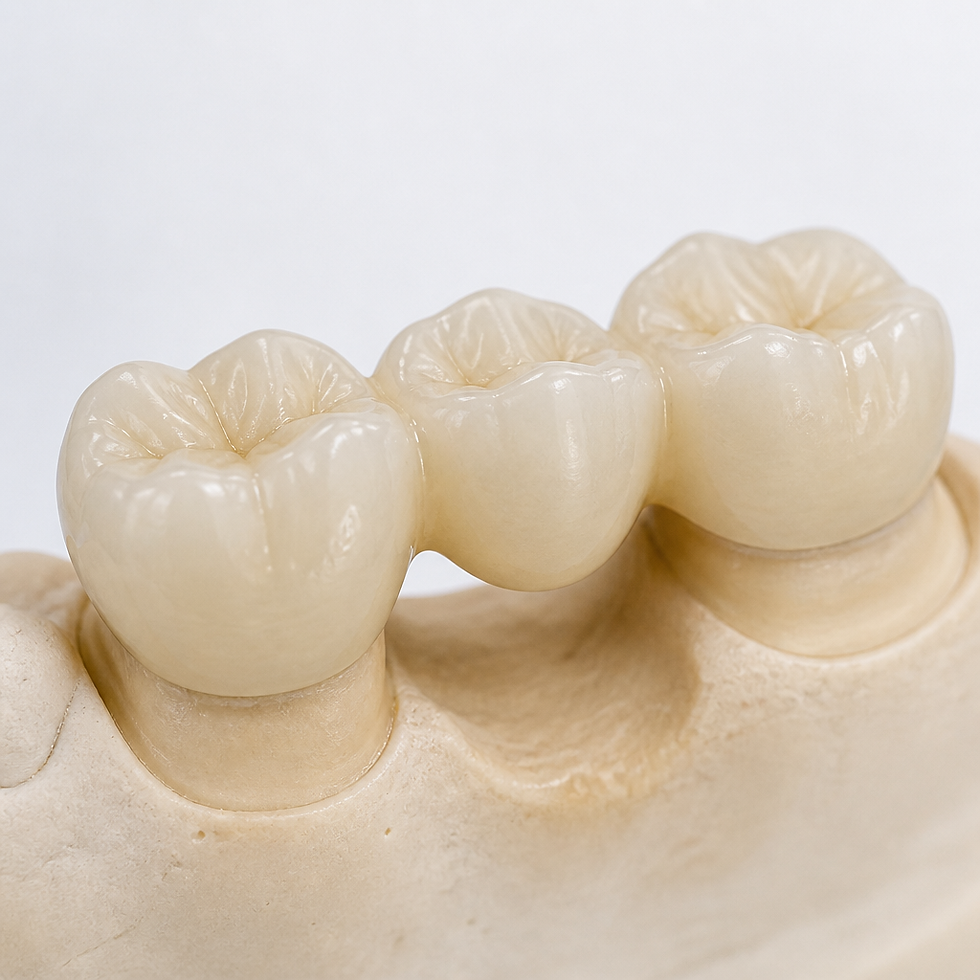
A dental bridge is a fixed dental restoration that literally bridges the gap left by one or more missing teeth. It is anchored to the natural teeth on either side of the space using dental crowns. Those anchor teeth are called abutment teeth, and the artificial tooth (or teeth) suspended between them is called a pontic. The result is a restoration that looks, feels, and functions like a real tooth.
Pontics are typically made from porcelain, ceramic, or porcelain fused to metal, and a skilled dentist will match them to the shade of your surrounding teeth. From across a room, a well-made bridge is essentially invisible. More importantly, it restores your ability to chew properly and prevents the surrounding teeth from drifting into the empty space over time.
Unlike a removable partial denture, a bridge is cemented permanently in place. You do not take it out at night. You clean it like you would natural teeth, with some minor adjustments in technique. For many patients in St. John's, that permanence is the single biggest reason they choose a bridge over other missing tooth replacement NL options.
Types of Dental Bridges
Not every bridge is the same, and the type your dentist recommends will depend on the location of the gap, the condition of surrounding teeth, and your long-term goals. There are four main types, and each has a specific use case.
Traditional Dental Bridge
This is the most common type. It uses crowns on both neighboring teeth to support a pontic in the middle. Traditional bridges are the most durable fixed bridge option and work well when you have healthy natural teeth on both sides of the gap. The tradeoff is that the dentist must reduce the abutment teeth slightly to allow the crowns to fit over them. For most patients, this is a worthwhile tradeoff for a result that can last well over a decade with proper care.
Cantilever Bridge
A cantilever bridge uses only one abutment tooth instead of two. It is best suited for areas of the mouth that experience less chewing pressure, typically toward the front. Because it relies on a single anchor, it is not as strong as a traditional bridge and is generally not recommended for back teeth where bite forces are highest.
Maryland Bridge (Resin-Bonded Bridge)
A Maryland bridge skips the crowns entirely. Instead, metal or porcelain wings are bonded to the backs of the adjacent teeth to hold the pontic in place. Because the neighboring teeth require minimal preparation, this is the least invasive type of bridge. It works well for replacing front teeth but is not suitable for areas under significant chewing load. It is also often more affordable than a traditional bridge.
Implant-Supported Bridge
When multiple adjacent teeth are missing, an implant-supported bridge uses dental implants as the anchor points instead of natural teeth. This avoids the need to alter healthy neighboring teeth at all. It is the most stable option available, but it does involve a surgical component, which is a consideration for patients who specifically want to avoid surgery.
Quick Takeaways
Key Insight
Explanation
A fixed bridge requires no surgery for most patients
Traditional, cantilever, and Maryland bridges are placed without implants or incisions, making them accessible to patients who want to avoid surgical procedures.
The abutment teeth must be healthy
A traditional bridge relies on strong neighboring teeth. Significant decay or gum disease in those teeth must be addressed first, or an alternative like an implant may be needed.
Bridges prevent tooth drift
Leaving a gap untreated causes surrounding and opposing teeth to shift, which can create bite problems, jaw stress, and future alignment issues.
Porcelain bridges match natural tooth shade
Modern materials allow a skilled dentist to create a pontic that blends seamlessly with existing teeth, including subtle color gradients.
The Canadian Dental Care Plan may reduce your out-of-pocket cost
Stavanger Dental accepts the Canadian Dental Care Plan. Eligible patients in St. John's may receive partial or full coverage for bridge-related procedures depending on their plan.
A bridge typically takes two appointments
The first visit prepares the abutment teeth and places a temporary bridge. The second visit, usually a few weeks later, cements the permanent bridge.
With proper care, bridges can last 10 to 15 years or longer
Daily flossing under the pontic and regular professional cleanings are the primary factors in maximizing the lifespan of a fixed dental bridge.
Who Is a Good Candidate for a Bridge?
The ideal candidate for a fixed dental bridge is someone who is missing one tooth (or a small number of adjacent teeth) and has healthy natural teeth on either side of the gap. Those neighboring teeth need to be structurally sound enough to support crowns. If they already have large fillings or have been root canal treated, a bridge can still work, but the dentist will evaluate them carefully before proceeding.
Gum health matters just as much as tooth health. Active periodontal disease is a contraindication for bridge placement because the bone and tissue supporting the abutment teeth must be stable. At Stavanger Dental, patients receive a thorough assessment before any treatment plan is finalized, which means you will know exactly what needs to be addressed before a bridge is even discussed as the primary solution.

Age is rarely a barrier. Bridges can be placed in adults of virtually any age, provided overall oral health is acceptable. For younger patients whose jaw is still developing, a dentist will typically recommend waiting until growth is complete. For older adults who are managing multiple health conditions, sedation options available at Stavanger Dental can make the procedure more comfortable.
Patients who smoke or who have poorly controlled diabetes should discuss these factors openly with their dentist. These conditions do not automatically disqualify someone from getting a bridge, but they can affect healing and long-term outcomes, and the treatment plan may need to account for them.
Pro tip: If you are not sure whether a bridge or an implant is better for your situation, ask your dentist to walk you through the bone health in the gap area. Adequate bone volume can support an implant, which preserves the jawbone better long term. But if bone loss has already occurred or you want to avoid surgery entirely, a fixed bridge is often the smarter immediate choice.
Bridge vs. Implant vs. Partial Denture
Choosing between missing tooth replacement NL options comes down to your oral health baseline, your timeline, your budget, and your tolerance for surgical procedures. Each option has real advantages and real limitations. Here is a direct comparison.
Feature
Fixed Dental Bridge
Dental Implant
Removable Partial Denture
Surgery required
No (for traditional, cantilever, Maryland types)
Yes (implant post placed surgically)
No
Treatment timeline
2-3 weeks (two appointments)
3-6 months or longer (healing time required)
2-4 weeks
Bone preservation
Does not stimulate bone; some bone loss in gap area over time
Stimulates bone, prevents long-term bone loss
Does not preserve bone; can accelerate bone loss
Impact on adjacent teeth
Requires reduction of abutment teeth
No impact on neighboring teeth
Clasps can put pressure on adjacent teeth
Stability and comfort
Fixed, highly stable
Fixed, most stable option available
Removable, can shift during eating or speaking
Cost (general range)
Generally lower upfront cost than implants
Generally higher upfront cost
Generally lowest upfront cost
Longevity
10-15 years or more with proper care
Can last decades with proper care
5-10 years, may need adjustment or replacement sooner
The honest answer most dentists will give you: if you want the fastest, most affordable fixed result and you have solid neighboring teeth, a bridge is the right call. If long-term bone preservation is your priority and you are prepared for a surgical process and longer timeline, an implant is superior. A partial denture is a reasonable interim option but is rarely the best permanent solution for someone who qualifies for a bridge or implant.
A dental bridge does not just fill a gap in your smile. It preserves the alignment of surrounding teeth, restores proper bite function, and prevents the chain of oral health problems that untreated tooth loss tends to trigger.
The Bridge Procedure Step by Step
Understanding exactly what happens during the bridge process removes a lot of the anxiety patients feel before their first appointment. The procedure is straightforward and, for the vast majority of patients, is completed in two visits.
First Appointment: Preparation and Impressions
The dentist begins by numbing the area with local anesthetic. Once the area is comfortable, the abutment teeth are reshaped. A small amount of enamel is removed from each abutment tooth so that the crowns will fit over them properly without adding unnecessary bulk to your bite. The amount removed is precise and minimized as much as possible.
After preparation, the dentist takes a detailed impression of your teeth. This impression goes to a dental laboratory where your custom bridge is fabricated. A temporary bridge is placed at this appointment to protect the prepared teeth and maintain your appearance while you wait for the permanent restoration.
Second Appointment: Fitting and Cementing
When the permanent bridge comes back from the lab (typically within a couple of weeks), you return to have the temporary removed and the permanent bridge fitted. The dentist will check the fit, the bite, and the appearance carefully before cementing it in place. Adjustments can be made at this stage if anything feels off. Once the bridge is cemented, it is fixed and permanent.

Some mild sensitivity in the abutment teeth for a few days after each appointment is normal. Most patients manage this easily with over-the-counter pain relief if needed. If discomfort persists beyond a week, contact your dental office to rule out any fit issues.
Pro tip: At your first bridge appointment, ask your dentist to show you how to use a floss threader or interdental brush under the pontic before you leave. Learning this technique on day one means you will not be guessing about it weeks later when the permanent bridge is in place.
Caring for Your Dental Bridge
A bridge requires the same daily attention as natural teeth, plus one additional step: cleaning under the pontic. Food and bacteria can accumulate in the space between the pontic and your gum line. Over time, neglecting that area leads to gum disease under the bridge, which is one of the most common reasons bridges fail prematurely.
Use a floss threader, dental floss designed specifically for bridges, or a water flosser to clean under the pontic once a day. Regular flossing around the abutment crowns is equally important. Brush twice daily with a soft-bristled toothbrush and fluoride toothpaste, and maintain your scheduled professional cleanings at Stavanger Dental every six months. At those visits, the hygienist can clean areas you might be missing and monitor the health of the gum tissue around the bridge.
Avoid habits that put undue stress on a bridge. Chewing ice, biting your nails, or using your teeth to open packaging are the most common culprits for chipping a porcelain pontic or stressing the cement bond. If you grind your teeth at night, discuss a nightguard with your dentist. Bruxism is a significant risk factor for bridge longevity.
Cost and the Canadian Dental Care Plan
The cost of a dental bridge in Newfoundland varies depending on the number of units in the bridge, the materials used, and any preparatory treatments required. Traditional three-unit bridges (two crowns and one pontic) are more common and generally less expensive than longer spans. Maryland bridges tend to cost less than traditional bridges because less preparation is involved.
Stavanger Dental accepts the Canadian Dental Care Plan, which means eligible patients may have a portion of bridge-related costs covered. The plan's coverage for restorative procedures including crowns and bridges depends on the patient's income level and other eligibility criteria. If you are unsure whether you qualify or what your coverage includes, the team at Stavanger Dental can help you confirm this before you commit to a treatment plan. Starting that conversation early avoids surprises on the day of your appointment.
For patients who are not covered under the Canadian Dental Care Plan, ask about flexible payment arrangements. Most dental offices, including family practices like Stavanger Dental, understand that restorative work represents a meaningful expense and are willing to work with patients on timing and payment options.
Frequently Asked Questions
How long does a dental bridge last?
A well-maintained fixed dental bridge typically lasts between 10 and 15 years. Some last considerably longer. The biggest factors are oral hygiene habits, whether the patient grinds their teeth, and the quality of the initial fit. Patients who attend regular cleanings and properly clean under the pontic consistently see the longest-lasting results.
Is getting a dental bridge painful?
The procedure itself is done under local anesthetic, so you should not feel pain during the appointment. Some sensitivity in the abutment teeth is common for a few days after preparation. It is typically manageable with standard over-the-counter pain relief. If you experience significant or prolonged discomfort, contact your dental office promptly to rule out any complications.
Can a dental bridge be placed on the same day a tooth is extracted?
In most cases, no. The gum and bone tissue need time to heal after an extraction before a permanent bridge can be fitted accurately. Placing a bridge too soon risks a poor fit as the tissue changes shape during healing. Your dentist will advise on the appropriate waiting period, which is often a few weeks to a few months depending on the extraction site.
What is the difference between a dental bridge and a partial denture?
A dental bridge is permanently cemented in place and is not removed. A partial denture is removable and is taken out for cleaning and at night. Bridges are generally more stable during eating and speaking, do not require adhesives, and are preferred by most patients who qualify for them. Partial dentures are usually considered when multiple teeth in different areas are missing or when the patient is not a candidate for a bridge.
Does Stavanger Dental offer bridges for patients who are anxious about dental work?
Yes. Stavanger Dental offers sedation options for patients who experience dental anxiety. This can make the bridge preparation appointment significantly more comfortable. Discussing your anxiety level openly with the team before your appointment allows them to tailor the experience to your needs, whether that means additional local anesthetic, nitrous oxide, or another sedation option.
Will my dental bridge look natural?
Modern porcelain and ceramic materials allow dental bridges to closely match the color, translucency, and shape of natural teeth. A dentist who takes proper shade measurements and works with a quality dental laboratory can produce a result that is difficult to distinguish from natural teeth. Front-tooth bridges in particular are crafted with attention to the subtle color variations that make a restoration look lifelike rather than artificial.
Is a dental bridge covered under the Canadian Dental Care Plan?
Coverage under the Canadian Dental Care Plan depends on your eligibility and the specific procedures involved. Restorative treatments including crowns, which are components of a bridge, are included in the plan's framework. The best way to get a clear answer for your specific situation is to contact Stavanger Dental directly. The team can review your plan details and explain what portion of your bridge costs may be covered before any treatment begins.
Have you recently had a dental bridge placed or are you weighing your options for replacing a missing tooth? Share your experience or questions below. Your perspective helps other patients in St. John's make more informed decisions about their care.


Comments