

Dental Veneers St. John's: Are They Worth It?
More St. John's patients are asking about dental veneers than ever before, and the question is almost always the same: are they actually worth the investment? The short answer is yes, for the right candidate. But the longer answer requires understanding exactly what veneers do, what they cost, how long they last, and whether your specific dental situation makes you a good fit. This guide was written specifically for patients in St. John's, NL considering veneers at a practice like Stavanger Dental, where cosmetic treatment is part of a broader, personalized care plan rather than a one-size-fits-all upsell.
Table of Contents
What Are Dental Veneers?
A dental veneer is a thin shell, typically made of porcelain or composite resin, that is bonded to the front surface of a tooth. The goal is cosmetic: veneers correct discoloration, chips, uneven spacing, minor misalignment, and teeth that are worn down or oddly shaped. They are not a structural restoration the way a crown or filling is, but they are one of the most effective cosmetic tools a dentist has.
In practice, veneers cover what patients are most self-conscious about, usually the front six to eight teeth that show when you smile. Because porcelain reflects light the way natural enamel does, a well-placed veneer is nearly indistinguishable from the surrounding teeth. That level of realism is part of what makes them popular among cosmetic dentistry patients in St. John's and across Newfoundland.
What most patients do not realize before their first consultation is that placing veneers requires removing a small amount of enamel from the tooth surface. This is typically 0.3 to 0.5 millimetres for porcelain veneers, a detail that matters because the process is irreversible. You need to go in with clear expectations.
Quick Takeaways
Key Insight
Explanation
Veneers are irreversible
Enamel removal is permanent. Once you have veneers placed, you will always need them or a replacement restoration on those teeth.
Porcelain lasts 10-15 years on average
With proper care, porcelain veneers in NL typically last a decade or more. Composite veneers average 5-7 years before needing replacement or repair.
Not everyone is a candidate
Patients with severe bite issues, bruxism, or insufficient enamel may not qualify. A cosmetic consultation is necessary before committing.
Veneers do not cover major structural damage
If a tooth is significantly decayed or broken, a crown is the appropriate restoration. Veneers are cosmetic, not structural.
The Canadian Dental Care Plan does not cover cosmetic procedures
Veneers are generally not covered under provincial or federal dental plans in Canada, including the CDCP. Budget accordingly.
Composite veneers are a lower-cost starting point
For patients in St. John's who want to test the aesthetic before committing to porcelain, composite is a practical, reversible-in-spirit alternative.
Gum health must come first
A good cosmetic dentist will not place veneers on a mouth with active gum disease or untreated decay. Preventive care comes before cosmetics.
Porcelain vs. Composite Veneers: Which Is Right for You?
This is the first real decision point in any veneer consultation, and it has major implications for cost, longevity, and the number of appointments you will need. The right choice depends on your budget, your timeline, and the specific cosmetic problem you are trying to solve.
Porcelain Veneers
Porcelain veneers are fabricated in a dental laboratory. After your dentist prepares your teeth and takes impressions or digital scans, the veneers are custom-made and bonded at a second appointment. The result is highly durable, stain-resistant, and extremely natural-looking. Porcelain is the material of choice for most patients who want long-term results and are treating multiple teeth at once.
The trade-off is cost and irreversibility. Because the enamel preparation is more involved, there is no going back once porcelain veneers are placed.
Composite Resin Veneers
Composite veneers are applied directly to the tooth surface in a single appointment. The dentist sculpts and bonds the resin layer by layer and cures it with a special light. They cost significantly less than porcelain and can often be completed without removing as much enamel, though some preparation is still typically required.
The drawback is durability. Composite is more prone to staining and chipping over time. It also does not have the same light-reflective quality as porcelain, which can make composite veneers look slightly less natural under close inspection.
For St. John's patients who want a meaningful cosmetic improvement without a large upfront commitment, composite veneers are a genuinely useful option, especially for younger patients whose needs may evolve over time.


Are Veneers Worth It? What the Data and Real Cases Show
Patient satisfaction data on dental veneers is consistently high. A 2021 review published by the American Academy of Cosmetic Dentistry found that porcelain veneers have a clinical survival rate of approximately 93 percent at 10 years when properly placed on suitable candidates. That is not a small number. For a cosmetic procedure that fundamentally changes how someone feels about their smile, a decade of reliable results is strong value.
The question of worth is more complicated when patients are not well-selected. A common mistake is placing veneers on patients with unresolved bruxism (tooth grinding). Without a night guard and proper occlusal management, even excellent porcelain veneers will crack within a few years. In practice, any credible cosmetic dentist in St. John's should screen for grinding habits before recommending veneers.
"Dental veneers, when placed on appropriately selected patients by a trained clinician, represent one of the highest satisfaction-to-longevity ratios of any elective cosmetic dental procedure." - American Academy of Cosmetic Dentistry, Clinical Guidelines
The worth calculation also changes depending on what you are treating. Veneers for deep intrinsic staining, which does not respond to whitening, offer real functional improvement to someone's confidence and social comfort. Veneers to fix a single slightly chipped tooth when bonding would achieve the same result for a fraction of the cost is a different conversation entirely.
For most patients at a St. John's family dental office like Stavanger Dental, the honest recommendation is: if you have multiple cosmetic concerns affecting your front teeth and your oral health is in good shape, porcelain veneers are worth the investment. If you have a single isolated concern, explore bonding or composite first.
What Do Veneers Cost in St. John's, NL?
Pricing for porcelain veneers in NL typically ranges from $1,000 to $2,500 per tooth depending on the complexity of the case, the materials used, and the dental practice. Composite veneers generally run between $300 and $800 per tooth. A full smile makeover covering eight to ten teeth with porcelain can therefore represent an investment of $10,000 to $25,000.
This is a significant amount of money, and most dental insurance plans in Canada treat veneers as cosmetic and non-covered. The Canadian Dental Care Plan, which Stavanger Dental accepts, focuses on preventive and basic restorative care. Veneers fall outside that coverage. Patients should ask their dental office about flexible payment options or phased treatment plans that allow them to complete a full smile transformation over multiple appointments rather than all at once.
A common mistake patients make is choosing the least expensive provider without factoring in the quality of the laboratory work. A veneer fabricated by a skilled dental ceramist looks dramatically better and lasts longer than one produced at a discount lab. In the long run, a $1,500 veneer that lasts 12 years costs less than a $900 veneer replaced after five years.
Pro tip: Ask your cosmetic dentist in St. John's specifically which dental laboratory fabricates their porcelain veneers and whether it is Canadian or overseas. Domestic labs tend to offer better communication, tighter turnaround times, and more accountability for fit and shade accuracy.
Who Is a Good Candidate for Veneers?
The best candidates for dental veneers are patients who have generally good oral health and specific, addressable cosmetic concerns. Here is what that looks like in practice at a St. John's dental office.
Good Candidates
Patients with permanent staining that does not respond to professional whitening, such as fluorosis or tetracycline discoloration, are among the strongest veneer candidates. The same applies to patients with minor chips, worn enamel edges, small gaps between front teeth, or slightly misshapen teeth. If your teeth are healthy and your gums are stable, you are very likely a candidate.
Patients Who Should Consider Other Options First
Patients with active decay, gum disease, or significant bite misalignment need to address those issues before cosmetic work. Veneers placed over unresolved oral health problems will fail early and expensively. Similarly, patients with severe crowding or bite problems are often better served by Invisalign before or instead of veneers, which is a treatment Stavanger Dental also offers in St. John's.
Patients who grind their teeth heavily are not automatically excluded, but they need a custom nightguard as part of the treatment plan. Skipping this step is one of the fastest ways to destroy a set of veneers.

Veneer Types Compared: A Practical Breakdown
Feature
Porcelain Veneers
Composite Resin Veneers
Average lifespan
10-15 years
5-7 years
Cost per tooth (NL estimate)
$1,000 - $2,500
$300 - $800
Number of appointments
2 (prep + placement)
1 (same-day)
Stain resistance
Excellent
Moderate (prone to staining)
Natural appearance
Very high (light-reflective)
Good, but less translucent
Enamel removal required
Yes (0.3-0.5 mm)
Minimal to none in some cases
Repairability
Cannot be repaired, must be replaced
Can often be repaired chair-side
Best suited for
Multiple teeth, severe staining, full smile makeover
Single teeth, budget-conscious patients, younger patients
The Veneer Process at a St. John's Family Dental Office
Knowing what to expect during the veneer process reduces anxiety and helps patients make better-informed decisions. Here is what the process typically looks like at a practice like Stavanger Dental in St. John's.
Step 1: Cosmetic Consultation
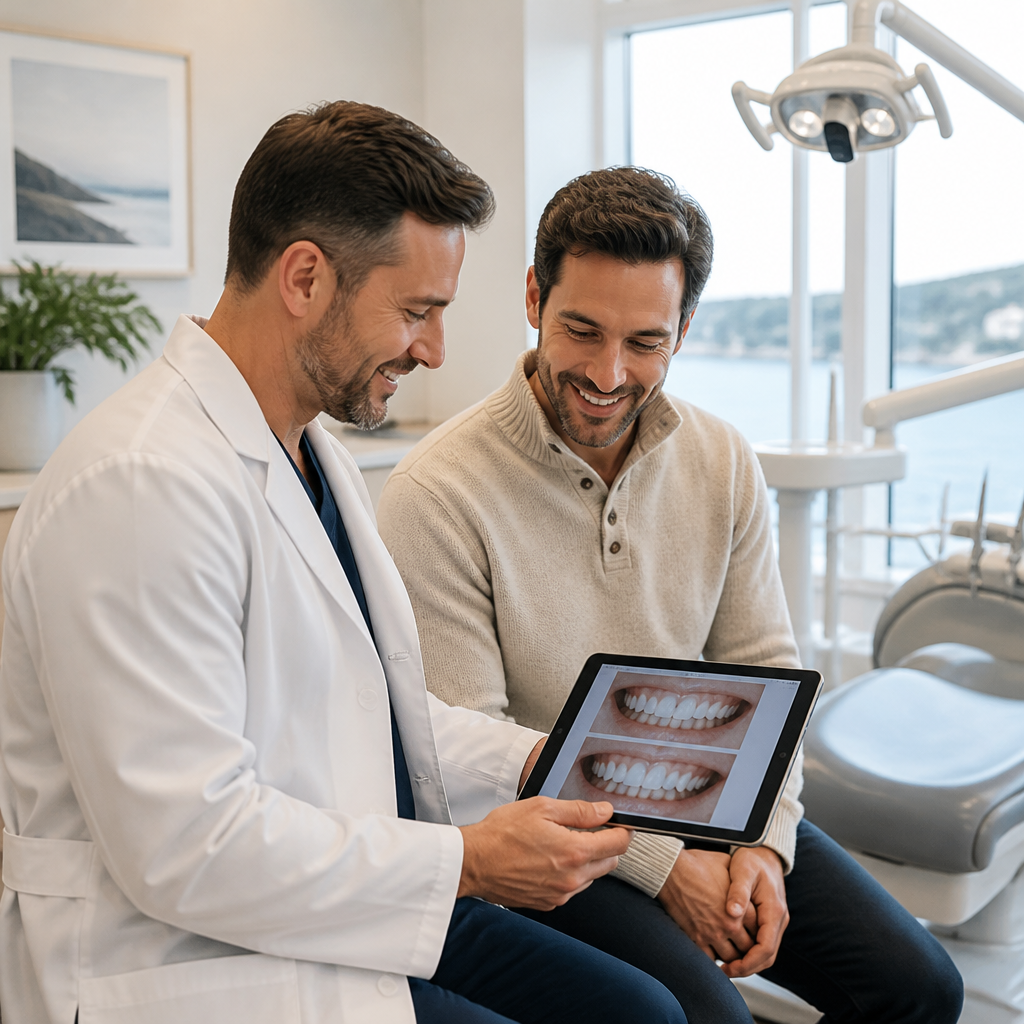
The process starts with a consultation where your dentist evaluates your oral health, takes X-rays, discusses your aesthetic goals, and determines whether veneers are the appropriate treatment. Digital imaging may be used to show you a preview of the expected outcome. This is the right time to ask questions about material choice, cost, and the number of teeth being treated.
Step 2: Tooth Preparation and Impressions
For porcelain veneers, the dentist removes a thin layer of enamel from each tooth being treated. Digital or physical impressions are taken and sent to the dental laboratory. Temporary veneers may be placed while the permanent ones are being fabricated, typically over two to three weeks.
Step 3: Bonding Appointment
Once the porcelain veneers are returned from the lab, your dentist checks the fit and shade, makes any minor adjustments, and permanently bonds them to your teeth using a light-cured dental adhesive. The result is immediate and visible from the first appointment after bonding.
Pro tip: Bring a photo reference of the smile result you are aiming for to your cosmetic consultation at a St. John's dental office. Concrete visual references help your dentist work with the lab to match your expectations on shade, length, and shape before anything is permanently placed.
How Long Do Veneers Last and How Do You Care for Them?
Porcelain veneers typically last between 10 and 15 years with proper care. Some patients retain their original veneers for 20 years without issue. The data consistently shows that longevity is most closely linked to three factors: the quality of the initial placement, the patient's bite mechanics, and daily maintenance habits.
Care for veneers is not dramatically different from caring for natural teeth. Brush twice daily with a non-abrasive toothpaste, floss regularly, and attend your scheduled preventive appointments. What damages veneers prematurely is habitual biting of hard objects (ice, fingernails, pen caps), using teeth as tools, and unmanaged grinding.
At Stavanger Dental, preventive care and personalized treatment planning are part of the practice's core approach, meaning veneer patients are supported through ongoing maintenance appointments rather than left to manage on their own after the cosmetic work is done. That continuity of care makes a material difference in how long cosmetic results last.
Frequently Asked Questions
Are dental veneers covered by insurance in Newfoundland?
No. Dental veneers are classified as a cosmetic procedure and are not covered under most Canadian dental insurance plans or the Canadian Dental Care Plan. Patients should expect to pay out of pocket and ask about payment plan options through their dental office in St. John's.
Do veneers hurt to get placed?
The preparation appointment for porcelain veneers involves local anesthetic, so you should not feel pain during the procedure. Some patients experience temporary sensitivity after the enamel is removed and while wearing temporaries. This typically resolves once the permanent veneers are bonded.
Can I get veneers on just one or two teeth?
Yes, and this is actually a common scenario. Single-tooth veneers are often used to correct a chipped, discolored, or misshapen tooth that stands out from the rest of the smile. The key challenge is matching the shade and shape of the veneer to the surrounding natural teeth, which requires a skilled cosmetic dentist and a quality dental laboratory.
How is a veneer different from a crown?
A veneer covers only the front surface of a tooth and requires minimal tooth reduction. A crown encases the entire tooth and is used when the tooth is structurally compromised, heavily decayed, or has had a root canal. Veneers are cosmetic; crowns are restorative. If your tooth has significant structural damage, your cosmetic dentist in St. John's will likely recommend a crown instead.
What happens if a veneer chips or falls off?
Composite veneers can often be repaired chair-side at your dental office. Porcelain veneers cannot be repaired the same way. A cracked or debonded porcelain veneer must be replaced entirely. This is why material quality and proper bonding technique matter so much during the original placement. Patients in St. John's should contact their dental office promptly if a veneer is damaged, since leaving a prepared tooth unprotected can lead to sensitivity and decay.
Are veneers a good alternative to braces or Invisalign for crooked teeth?
For very mild cosmetic crowding or spacing, veneers can create the appearance of straighter teeth without orthodontic treatment. However, for moderate to significant misalignment, orthodontics is the appropriate first step. Placing veneers on severely misaligned teeth can compromise the bite and shorten the lifespan of the restorations. A thorough consultation at a St. John's dental office will help determine the right sequence of treatment for your specific case.
If you have had veneers placed or are currently considering them in St. John's, we would love to hear what questions came up during your consultation process and whether this guide addressed them.
We would love your feedback and any insights you would share with others. What perspective would you add?


Comments