

Digital X-Rays and iTero Scanning: St. John's Dental Tech
Most patients sitting in a dental chair still assume X-rays mean biting down on uncomfortable cardboard film and waiting while someone disappears into a darkroom. That picture is outdated by at least a generation of technology. At a practice like Stavanger Dental in St. John's, Newfoundland, digital X-rays and iTero digital scanning have replaced those old workflows entirely. For families in St. John's looking for a digital X-rays dentist, understanding what these tools actually do, and why they matter for your care, helps you make a smarter choice about where you take your family. This article breaks both technologies down in plain terms.
Table of Contents
Quick Takeaways
Key Insight
Explanation
Digital X-rays cut radiation exposure significantly
Studies show reductions of 50% to 90% compared to traditional film X-rays, making imaging far safer for children and patients who need frequent monitoring.
Images appear instantly on screen
No darkroom, no chemical processing. Your dentist reviews your X-ray within seconds of capture, which shortens your appointment time.
iTero scanning is completely radiation-free
The iTero scanner uses optical and laser technology, not ionizing radiation, to create a full 3D model of your teeth and gums.
iTero replaces the gooey impression tray
No biting into putty material. A handheld wand passes gently over your teeth and produces a detailed digital model in minutes.
Invisalign planning is more accurate with iTero
Scans feed directly into Invisalign's treatment planning software, enabling precise aligner customization and outcome simulations before treatment starts.
Digital X-rays can detect problems earlier
Dentists can magnify, adjust contrast, and zoom into specific areas on screen, spotting cavities, bone loss, and fractures earlier than with film.
Both technologies reduce the need for retakes
Immediate review means errors in positioning are caught right away and corrected without a second round of exposure or additional impression material.
What Are Digital X-Rays and How Do They Work?
Digital X-rays replace traditional film with an electronic sensor placed inside the mouth. When the X-ray beam passes through the teeth and bone, the sensor captures the image and sends it directly to a computer screen within seconds. No chemicals, no film development, no waiting.
The images produced are high-resolution and fully adjustable. Your dentist at Stavanger Dental can increase contrast, zoom into a specific tooth, or compare a current image against a previous scan from the same screen. That level of control simply does not exist with conventional film.
There are two main types used in a family dental practice. Intraoral X-rays are the most common, capturing individual teeth and the surrounding bone. Panoramic X-rays capture the entire jaw and skull in a single image, which is especially useful when evaluating wisdom teeth, orthodontic needs, or implant placement.
Pro tip: If you have not had dental X-rays in a few years because you were worried about radiation, bring it up with your dentist directly. The dose from digital X-rays is now comparable to just a few hours of ordinary background radiation from the environment around you.


Radiation Safety: The Numbers You Should Actually Know
Radiation anxiety is one of the most common reasons patients decline or delay dental imaging. The anxiety is understandable, but the actual numbers settle the debate quickly. Digital dental radiography offers a substantial reduction in radiation exposure compared to traditional film-based methods, with studies indicating reductions of 50% to 90%. Intraoral digital radiography systems typically use 50% to 60% less radiation than conventional E-speed film, and some wireless digital sensors achieve reductions of up to 80%.
To put that in concrete terms: a single digital intraoral X-ray exposes a patient to approximately 0.005 millisieverts of radiation. The average person is exposed to roughly 3.2 millisieverts per year from natural background sources alone, things like radon gas in soil, cosmic rays, and building materials. A digital dental X-ray emits an amount of radiation comparable to just a few hours of that unavoidable daily exposure.
The reduction is especially important for certain groups. Children, patients who are pregnant, and anyone requiring frequent imaging for orthodontic treatment or periodontal management benefit most from the lower cumulative dose. This is precisely why a family dental practice needs to be equipped with digital imaging, not just for convenience but for genuine, measurable safety.
The core safety principle guiding modern dental imaging is ALARA, As Low As Reasonably Achievable. Digital X-rays are the practical application of that principle in every routine appointment.
Digital X-rays also support the ALARA principle through their positioning technology. Because the dentist can review the image immediately and identify a positioning error right away, the chances of needing a retake are reduced. Fewer retakes means less cumulative exposure. Film-based systems offered no such immediate feedback.
Pro tip: Always inform your dental team if you are pregnant or think you might be. Even though the radiation dose from digital X-rays is very low, your dentist can time non-urgent imaging accordingly and ensure proper protective measures are in place for any necessary imaging.
iTero Scanning: More Than Just a 3D Picture
The iTero scanner is a handheld digital device that creates precise, high-resolution 3D models of your teeth and gums in real time. A trained dental team member moves a small wand gently around your mouth, and the scanner captures thousands of images per second, assembling them into a full digital model on screen. Most scans are completed within a few minutes.
What separates iTero from older digital impression systems is its combination of speed and clinical function. The 3D model is ready the same visit, and it serves multiple purposes: treatment planning, diagnostic review, Invisalign aligner fabrication, crown and bridge fittings, and ongoing monitoring of changes in your oral health over time.
The End of the Impression Tray
Traditional dental impressions required patients to bite into a tray filled with goopy alginate or polyvinyl siloxane material and hold still for several minutes while it set. For patients with a sensitive gag reflex, this was genuinely unpleasant. The result was a physical mold that could distort, had to be shipped to a dental lab, and occasionally required retaking if the patient moved or the material did not set properly.
iTero scanning eliminates all of that. There is no material in the mouth, no gag-inducing tray, and no waiting on a lab to receive a physical mold. The digital file is created and transmitted immediately. For patients at Stavanger Dental who need crowns, bridges, veneers, or orthodontic treatment, this translates to a more comfortable experience and more accurate results.
NIRI Technology and Early Cavity Detection
The iTero Element 5D uses near-infrared imaging technology, referred to as NIRI. This technology uses non-ionizing radiation in the near-infrared spectrum, differentially scattering light off tooth surfaces to generate images that allow for the detection of interproximal cavities, the type that form between teeth where visual inspection alone cannot reach. Importantly, NIRI does this without any ionizing radiation at all.
In practice, this means the scanner can identify cavities and early structural changes in tooth enamel before they become visible on standard X-rays. Catching decay at that stage changes the entire treatment conversation: a small preventive intervention instead of a filling, or a filling instead of a crown.

Digital X-Rays vs. Traditional Film vs. iTero: A Side-by-Side Comparison
Patients who have moved between dental practices sometimes ask why one office uses different equipment from another. This comparison clarifies the practical differences between the three approaches and why the technology at Stavanger Dental sits at the more capable end of the spectrum.
Feature
Traditional Film X-Rays
Digital X-Rays
iTero Digital Scanner
Radiation exposure
Higher, requires chemical film development
50%-90% less than film; ionizing radiation used
Zero ionizing radiation (optical and laser imaging)
Image availability
Minutes to hours after processing
Seconds after capture
Real-time, same appointment
Image quality
Fixed; cannot be enhanced after capture
Adjustable contrast, zoom, and brightness on screen
Full-color, high-resolution 3D model
Patient comfort
Cardboard film edges, sometimes uncomfortable sensors
Smaller digital sensors, generally more comfortable
No trays, no impression material; wand moved gently around teeth
Primary clinical use
Caries, bone loss, infection detection
Same as film plus enhanced detection of subtle changes
Impressions, Invisalign planning, crown/bridge fittings, NIRI cavity screening
Environmental impact
Chemical waste from developing process
No chemical waste
No chemical waste
Storage and sharing
Physical film, requires physical storage and transfer
Digital file, stored electronically, easy to share with specialists
Digital file, integrates directly with treatment planning software
How iTero Scanning Powers Invisalign at Stavanger Dental
Stavanger Dental offers Invisalign as part of its orthodontic services, and the iTero scanner is the tool that makes that process accurate and predictable. The two systems are built to work together: iTero is made by Align Technology, the same company that manufactures Invisalign aligners, and digital scans upload directly into Invisalign's treatment planning software.
The scanner captures high-resolution 3D images of the teeth and bite, replacing traditional impressions with a faster, more comfortable digital process. Those scans feed directly into Invisalign's software, enabling precise aligner customization. A key feature is the Outcome Simulator, which uses your digital scan to generate a projected visualization of how your smile may look after completing treatment. This is a planning tool, not a guarantee of results, but it gives patients a concrete, realistic preview of their potential outcome before a single aligner is ordered.
The clinical benefits extend beyond the initial consultation. Tools like Progress Assessment allow the dental team to monitor treatment over time and make timely adjustments when needed, improving predictability and reducing the number of refinements required. For busy families in St. John's, fewer adjustment appointments means less disruption to work and school schedules.
Pro tip: If you are considering Invisalign and your current dentist still uses physical impressions, ask specifically whether they use an iTero scanner. The accuracy difference between a digital scan and a hand-poured plaster model is not trivial, and it shows in how well the aligners fit from the first tray.
What to Expect During Your Appointment
Understanding what the technology looks like in practice removes the uncertainty that can make a new dental visit feel intimidating. At Stavanger Dental, digital X-rays and iTero scanning are part of standard comprehensive examinations, not special add-ons that require a separate booking.
For digital X-rays, the process is nearly identical to what most patients remember from traditional film, except the sensor is placed in your mouth, the image appears on screen within seconds, and the dentist can discuss what they are seeing with you immediately. Bitewing X-rays take a few minutes in total. Panoramic X-rays require you to stand or sit still while the machine rotates around your head, and the image is ready almost instantly.
For an iTero scan, the dental team member will ask you to open your mouth and will move the small handheld wand across your teeth and gums in a slow, methodical pattern. There is nothing to bite down on and nothing to swallow. Most patients find the process noticeably more comfortable than traditional impressions. The full 3D model is visible on the monitor during the scan, so you can watch your own dental anatomy appear in real time. The entire scan typically takes a few minutes.
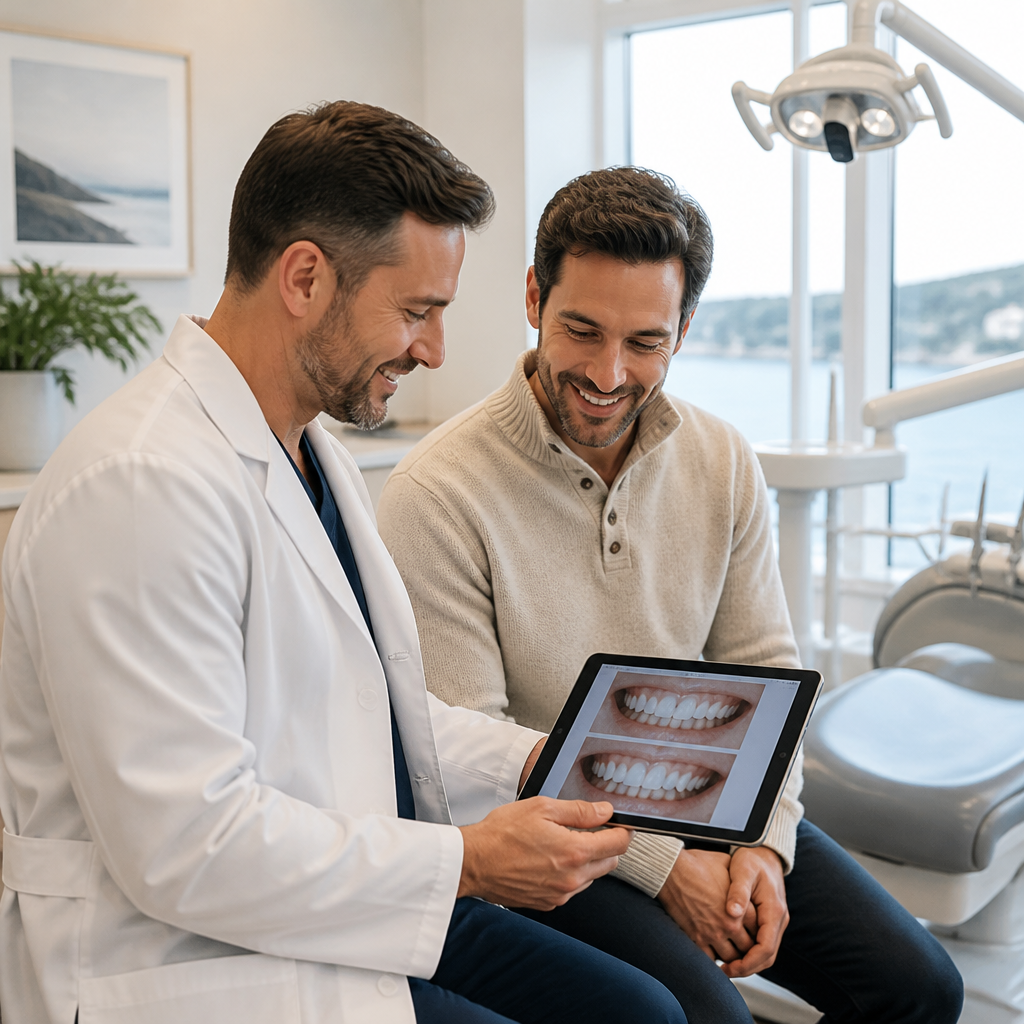
Both technologies also serve a patient education function that traditional film never could. Because images appear on screen immediately and can be annotated, your dentist can show you exactly what they are looking at, explain where a cavity is forming, or walk you through what an Invisalign treatment plan would involve, while you are still in the chair.
Frequently Asked Questions
Are digital X-rays safe for children?
Yes. Digital X-rays are significantly safer for children than traditional film X-rays because they use substantially less radiation. Pediatric patients are given appropriately sized sensors and protective lead aprons for additional safety. The reduced radiation dose is one of the main reasons family dental practices have moved to digital imaging.
How often do I need dental X-rays?
Frequency depends on your individual oral health history, age, and risk factors. A patient with a history of cavities or gum disease may need X-rays more often than someone with consistently healthy check-ups. Your dentist will recommend a schedule based on your specific situation. Because digital X-rays use so little radiation, monitoring patients who need more frequent imaging is far more manageable than it was with film.
Does the iTero scanner hurt?
No. The iTero scanner uses a small handheld wand that moves gently around your teeth and gums. There is no impression material, no biting, and no pressure. Patients with a strong gag reflex generally find it much more comfortable than traditional impression trays. The whole process takes a few minutes.
Can iTero scanning replace dental X-rays entirely?
Not entirely. The two technologies serve complementary but different purposes. Digital X-rays show structures inside the tooth and beneath the gum line, including root infections, bone levels, and impacted teeth. iTero scanning creates a detailed 3D surface model and, with NIRI technology, can screen for early interproximal cavities without radiation. A complete diagnostic picture typically relies on both tools together.
Does Stavanger Dental accept new patients and the Canadian Dental Care Plan?
Yes. Stavanger Dental in St. John's welcomes new patients and accepts the Canadian Dental Care Plan. The practice offers comprehensive care for patients of all ages, including digital X-rays and iTero scanning as part of standard examinations, along with services ranging from preventive care and orthodontics to implants and emergency appointments.
Is iTero scanning only used for Invisalign?
No. While iTero scanning is closely associated with Invisalign treatment planning, the scanner is also used for crown and bridge impressions, veneer fittings, denture work, and ongoing diagnostic monitoring. Its near-infrared imaging capability makes it a diagnostic tool in its own right, screening for cavities between teeth without using any ionizing radiation.
What should I do if I have not had dental X-rays in years because of radiation concerns?
Schedule an appointment and discuss your concerns directly with your dentist. Digital X-rays emit a dose comparable to a few hours of ordinary environmental background radiation. Avoiding dental imaging for years typically leads to larger problems being caught later, at a point where treatment is more complex and more costly. The risk of undetected decay or bone loss is meaningfully higher than any risk from the X-ray dose itself.
Have you experienced digital X-rays or an iTero scan at a dental office in St. John's? We would like to hear how the experience compared to older methods, share your thoughts in the comments below.
References
Nine benefits of digital dental X-rays explained for patients
How digital X-rays and iTero scanners are changing modern dentistry
Digital dental radiography: radiation reduction data and safety overview
iTero 5D scanner capabilities including NIRI cavity detection technology
Align Technology: how the iTero scanner integrates with Invisalign treatment planning


Comments